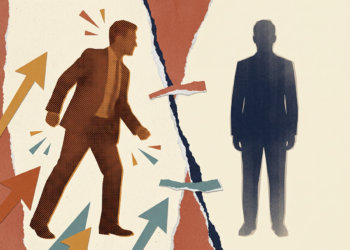
Imagine a sales team that has been humming along for years. Then the company announces a major reorganization. Territories get redrawn, budgets get slashed and some salespeople suddenly find themselves with fewer resources than their peers. What happens next? According to a new study, the answer may involve envy, and that envy can ripple outward to damage the very customer relationships the company depends on.
A team of researchers at the University of Toledo examined how organizational disruptions, things like layoffs, mergers or restructurings, can spark feelings of envy among salespeople. That envy, in turn, was linked to a chain of negative outcomes: more unethical selling behavior, a greater desire to quit and less focus on meeting customer needs. The study was published in the Journal of Business & Industrial Marketing.
Why envy? The question behind the research
Salespeople operate in environments that are inherently competitive. Compensation structures often pit colleagues against each other, and performance is tracked openly. When a disruption shakes up the organization, resource allocation can shift. Some salespeople may lose access to travel budgets, support staff or favorable territories while watching colleagues keep theirs. That comparison is where envy enters the picture.
Tyler Hancock, an Assistant Professor of Marketing at the University of Toledo and lead author of the study, worked with co-authors Michael L. Mallin, Ellen B. Pullins and Catherine M. Johnson. The team wanted to understand a specific gap in the existing research: while much attention had been paid to large-scale disruptions like the COVID-19 pandemic, less was known about how internal organizational disruptions, things happening within a company, create negative emotions that eventually spill over into customer relationships.
Envy, as the researchers define it, is a feeling of discontent or resentment that arises because of the possessions, qualities or good fortune of someone else. It is different from jealousy, which involves a fear of losing a relationship. Envy is about direct comparison between two people. In a sales context, that might mean a salesperson looking at a colleague who kept a lucrative territory after a reorganization and thinking, “I want what they have.”

A two-stage mental process
The researchers framed their investigation using cognitive appraisal theory, a psychological framework developed by Richard Lazarus and Susan Folkman in 1984. The theory describes a two-step mental process people go through when they encounter a stressful event. In the first step, a person evaluates whether the event is a threat to their well-being. In the second step, they assess what they can do about it, drawing on whatever coping resources they have available.
Applied to a sales setting, it works like this: a company announces a major restructuring (the event). A salesperson evaluates whether this restructuring threatens their resources, status or income (first step). If they perceive a threat and see colleagues who seem better off, envy may develop. Then, in the second step, the salesperson determines how to cope. Some may draw on personal psychological strengths like optimism and resilience. Others may not, and that is where the trouble begins.
How the study was designed
The research team surveyed 211 salespeople recruited through Amazon’s Mechanical Turk, an online platform commonly used for academic research. Participants had to qualify by identifying themselves as professional salespeople in non-retail roles and holding job titles that matched a salesperson profile. Several attention-check questions were embedded throughout the survey, and only about 3% of respondents failed them, well below the 15% concern threshold.
The sample was about 52% male, with an average age of roughly 33 years and about 9 years of sales experience. About 78% described themselves as selling business-to-business (B2B), meaning they sell products or services to other companies rather than directly to individual consumers. On average, about 54% of their compensation came from variable incentives like commissions or bonuses, rather than a fixed salary.
Participants were asked whether they had experienced organizational disruption, such as a reorganization, bankruptcy, layoffs or a company crisis, and how severely it had impacted their work. They also responded to established survey scales measuring envy, unethical selling behaviors (like lying to customers or applying pressure to close a sale they knew was wrong), turnover intentions (how much they were thinking about quitting), customer orientation (how focused they were on helping customers meet their needs) and psychological capital.
Psychological capital, often abbreviated as PsyCap, is a concept that bundles four positive psychological traits together: self-efficacy (confidence in one’s ability to succeed), optimism (expecting good outcomes), hope (having the willpower and pathways to reach goals) and resilience (the ability to bounce back from setbacks). The researchers measured all four dimensions using a 12-item scale.
What the data revealed
The researchers used a statistical technique called structural equation modeling to test their predictions. The analysis supported all six of their hypotheses. Here is the chain of events the data suggested:
First, organizational disruption was associated with higher levels of envy among salespeople. Second, that envy was, in turn, linked to three outcomes: an increase in unethical selling behaviors, an increase in turnover intentions and a decrease in customer orientation. Importantly, when the researchers tested whether disruption had a direct link to these three outcomes on its own, it did not. The link only appeared when envy was part of the chain. In statistical terms, this means envy fully explained the connection between disruption and the negative outcomes.
The team also tested whether jealousy or general job stress could explain the same patterns. While both jealousy and job stress showed some links to unethical selling and turnover intentions, neither was connected to a reduction in customer orientation. The statistical models using jealousy or job stress also fit the data less well overall. This suggests that envy was the more complete explanation for the full set of negative outcomes.
The buffering role of psychological capital
The second major finding involved psychological capital. The researchers found that salespeople with higher levels of PsyCap were less likely to develop envy when faced with organizational disruption. And because envy was reduced, the downstream negative effects were also weakened. Salespeople with stronger psychological capital were less likely to engage in unethical selling, less likely to want to quit and more likely to maintain their focus on customer needs, even during disruptive times.
Conversely, salespeople with lower levels of psychological capital were more vulnerable. For them, the link between disruption, envy and negative outcomes was stronger. The finding held across all three outcomes: unethical selling, turnover intentions and customer orientation.
What managers had to say
To add practical context to the survey results, the research team conducted a focus group with nine B2B sales managers from industries including manufacturing, financial services and supply chain. The managers ranged in experience from about one year to 25 years and included five men and four women.
The managers confirmed that envy during organizational disruptions is real and consequential. One described a situation where his company acquired a competitor, and during the integration, salespeople from the acquired firm were earning two to three times more than the existing team, despite selling essentially the same product. “Our salespeople saw these new salespeople coming in, making more, and there was clearly envy,” the manager said. The company had to realign territories to create balance, but still experienced attrition. The manager estimated that while 10 to 20 percent of affected salespeople responded by working harder, the remaining 80 percent disengaged, felt slighted or “checked out.”
Another manager described how territory realignment led salespeople to compare their geographic assignments, with some feeling they were stuck in areas with fewer customer opportunities and more competition. A third cited an example where one division’s salesforce drove domestic cars while another division drove German luxury vehicles, leading to “a lot of envy and even anger.”
Interestingly, the managers focused heavily on turnover as their primary concern. They spent less time discussing unethical selling behaviors or reductions in customer orientation, which the survey data showed were also connected to envy. This gap suggests managers may be underestimating some of the risks.
What this means for businesses
The study points to several actionable takeaways for sales leaders. When planning organizational changes, managers should consider the potential emotional fallout among salespeople, not just the operational logistics. Disruptions that appear routine from a leadership perspective, like redrawing territories or restructuring reporting lines, may trigger feelings of inequity and envy on the sales floor.
Investing in the psychological capital of a sales team may help cushion the blow. This could take the form of coaching programs that build resilience and optimism, transparent communication about why changes are happening and how they affect the team, or listening sessions that give salespeople a chance to voice concerns. Hiring practices might also be adjusted to screen for psychological traits like self-efficacy and resilience, particularly in industries where disruption is frequent.
Managers should also build close enough relationships with their salespeople to detect when envy is developing, rather than waiting for the consequences to appear. Open conversations about rewards, recognition and resource allocation may help prevent envy from taking root during turbulent periods.
Important caveats to keep in mind
A few limitations are worth noting. The study relied on self-reported survey data collected at a single point in time, which means it captured associations between variables rather than proving that one thing caused another. The researchers measured disruption with a single survey item rather than a multi-item scale, which limits the depth of what “disruption” captured. And while the sample was drawn from professional salespeople, it was collected through an online panel rather than from within specific companies, so the results may not perfectly reflect dynamics within a particular firm or industry.
The researchers also note that their study focused on what they call episodic envy, the kind triggered by a specific event, rather than dispositional envy, which is a more permanent personality trait. Future research might explore whether these different types of envy have different effects on selling behavior and customer relationships.