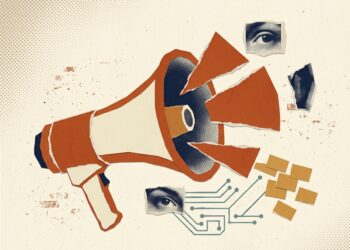
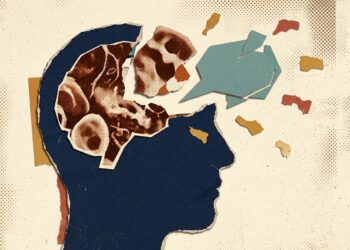
You are sitting in a coffee shop, catching up with a friend. You mention that you are thinking about taking up pottery. You discuss a specific brand of clay or a local studio. You have never searched for this hobby online. You have never visited a pottery website. Yet, the very next morning, an advertisement for that exact studio appears in your social media feed.
This experience is becoming a defining feature of modern life. It creates a distinct psychological recoil. The reaction is not just annoyance. It is a specific feeling of violation mixed with confusion. Consumers often ask if this is a coincidence or if their devices are actively listening to their private conversations.
Alisa Petrova and a team of researchers from the University of Bern and The University of Texas at Austin set out to investigate this precise sensation. Their study, published in Psychology & Marketing, aims to dissect the mechanics of this unease. The researchers sought to understand the sequence of cognitive events that transforms a personalized advertisement from a helpful tool into a source of fear.
Defining the Unseen Threat
Digital marketing has evolved rapidly. It moved from simple banner ads to complex systems driven by artificial intelligence. These systems use vast amounts of data to predict consumer needs. While this can increase efficiency, it often triggers a negative emotional response known as “creepiness.”
Petrova and her colleagues identified a gap in existing knowledge. Previous reports confirmed that people dislike intrusive tracking. However, business leaders and academics lacked a clear map of how this emotion develops in real time. They needed to know if creepiness is a property of the technology itself or a subjective reaction within the consumer.
To solve this puzzle, the authors applied the Component Process Model of Emotion. This framework treats emotion as a sequence of events rather than a static state. An individual appraises a stimulus, experiences a feeling, and then feels an urge to act. The team also utilized a concept called “predictive processing.” This theory suggests the brain is constantly predicting what will happen next. When an ad appears that knows too much, it creates a “prediction error.” The brain cannot explain how the ad got there, which signals a potential threat.
The Chain Reaction of Discomfort
The researchers proposed a specific chain of events to explain the phenomenon. They hypothesized that two specific mental assessments trigger the feeling of creepiness. The first is ambiguity. This occurs when the consumer cannot identify the source of the data used to target them. The second is “intrusive surveillance.” This is the interpretation that the brand is watching or spying on the individual.
The study posits that these two assessments lead to a feeling of uneasiness. This emotional discomfort then triggers a motivational state called “reactance.” Reactance is a psychological pushback. It happens when a person feels their freedom is being threatened. The consumer instinctively wants to resist the persuasion attempt to regain a sense of control.
Simulating the Creepy Encounter
To test this chain of events, the team conducted their first study with 465 participants in the United States. They aimed to establish baseline evidence that digital personalization causes this specific emotional sequence. The researchers created scenarios involving a fictitious headphone brand named “Soundtastic.”
Participants read narratives about different ways they might receive an ad. In one scenario, a voice assistant device sat inactive nearby while the participant talked about headphones. Later, an ad appeared referencing that conversation. In another scenario, the participant’s location data triggered the ad.
The results supported the researchers’ model. The scenarios involving opaque data collection—like the voice assistant—triggered high levels of ambiguity and a strong sense of surveillance. These cognitive appraisals linked directly to reported feelings of uneasiness. That uneasiness, in turn, was linked to a higher desire to resist the advertisement. The data showed that the emotion followed a predictable path from confusion to resistance.
The Role of Personality Traits
The researchers knew that not everyone reacts to technology in the same way. In a second study, they investigated how individual personality traits influence this process. They recruited 965 participants in Switzerland. The team focused on two specific characteristics: skepticism and technological paranoia.
Skepticism refers to a tendency to doubt the truthfulness of marketing claims. Technological paranoia is a broader fear that technology threatens privacy and well-being. The study used real branding this time, employing scenarios involving Apple headphones to ensure the results applied to familiar market contexts.
The analysis revealed that these personality traits act as amplifiers. Participants with high levels of skepticism and technological paranoia were much more likely to interpret the personalized ads as ambiguous and intrusive. They were quicker to assume the company had bad intentions. This heightened appraisal led to stronger feelings of uneasiness and stronger reactance. The study showed that the “creepiness” of an ad depends heavily on the mindset of the person viewing it.
Measuring the Damage to the Brand
The team then turned their attention to the financial implications. They wanted to know if this emotional reaction actually stops people from buying products. The third study involved 350 North American participants. The researchers used the Nike brand for this experiment.
Participants were divided into two groups. The first group imagined a scenario where a Nike ad appeared on Instagram immediately after a private conversation about sneakers. The second group imagined seeing the same ad, but without the preceding conversation. This setup isolated the variable of “unexplained personalization.”
The findings were significant. The group that experienced the “creepy” personalization reported a much lower intention to purchase the sneakers. The statistical analysis confirmed the path of destruction. The intrusive nature of the ad caused uneasiness. This uneasiness increased reactance. Finally, that reactance suppressed the consumer’s willingness to buy the brand. The experiment demonstrated that while the ad reached the right person, the method of delivery killed the sale.
Can Companies Apologize?
The final phase of the research addressed a practical question for marketers. If a brand accidentally triggers this creepy feeling, can they fix it? The researchers designed a fourth study to test different “interventions.”
732 participants engaged with a scenario involving an augmented-reality billboard. The scenario described a high-tech interaction where the billboard analyzed the user’s mood to recommend “Soundtastic” headphones. After the ad appeared, the researchers applied different strategies to mitigate the potential discomfort.
One group received a transparent explanation of how the data was processed. Another group received a statement assuring them that the brand had good intentions. Other groups received tangible benefits. These included a 20% discount, a $20 cash compensation, or a promise that a donation would be made to charity. One group saw a picture of kittens, intended to induce positive emotions.
The Limits of Intervention
The results of this final experiment offered a stark warning to businesses. Most of the interventions failed to reduce the feeling of creepiness. Explaining the technology did not help. Assuring the customer of good intentions did not lower their unease. The initial appraisal of the situation as “surveilling” and “ambiguous” was too strong to be talked away.
The study found that the feeling of creepiness is robust. Once the “prediction error” occurs and the brain flags the interaction as a threat, it is difficult to reverse that classification. The cognitive and emotional alarm bells ring louder than the company’s subsequent explanations.
However, two interventions showed a small effect on the final outcome. Offering monetary compensation ($20) and displaying positive images (kittens) resulted in slightly higher purchase intentions compared to doing nothing. The researchers noted that these strategies did not stop the creepy feeling itself. Instead, they likely acted as a distraction or a way to balance the “cost” of the data intrusion with a reward.
An Emotional Dead End
The research provides a comprehensive view of why hyper-personalized marketing often fails. The authors argue that creepiness is not just a vague annoyance. It is a structured emotional process. When a company crosses the line, they trigger a defense mechanism in the consumer’s brain.
This mechanism is rooted in the need for control and understanding. When an ad appears to know secrets it should not know, the consumer experiences a loss of agency. The brain struggles to predict how the company operates, leading to a state of alert.
The failure of the interventions suggests that this reaction is hardwired. Rational explanations (transparency) do not fix emotional violations (feeling watched). The damage to the brand relationship happens almost instantly and is difficult to repair.
Implications for the Industry
The findings suggest that businesses face a strict reality regarding data usage. The traditional approach of “act first, apologize later” appears ineffective in this context. The study indicates that the only effective strategy is prevention.
Marketers must design interactions that do not trigger the appraisals of ambiguity and surveillance. If a consumer cannot easily understand how they were targeted, the risk of backlash is high. The research shows that transparency must be inherent in the experience, not added as an explanation after the fact.
Furthermore, the study highlights the importance of knowing the audience. Consumers with high technological paranoia are likely to reject personalization that others might accept. For these segments, aggressive data tactics are counterproductive.
Petrova and her team have mapped the anatomy of a digital ghost. Their work shows that while algorithms can predict what a consumer wants to buy, they cannot always predict how a consumer will feel. The data proves that in the pursuit of relevance, brands risk triggering a primitive defense mechanism that closes wallets and erodes trust.